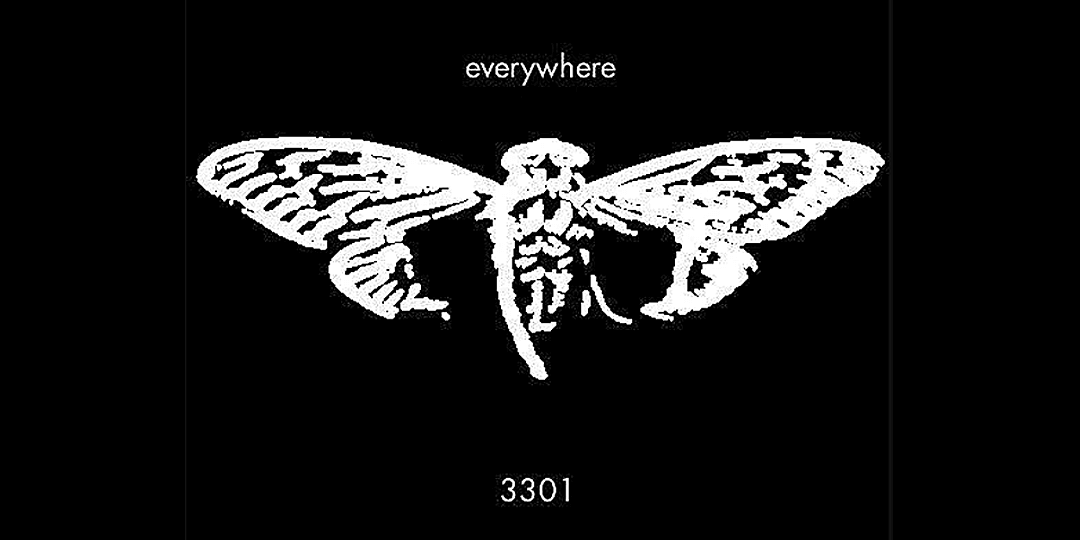
On January 4th, 2012, in the chaotic environment of Forchan, an image appeared that marked the beginning of one of the most complex intellectual challenges and digital mysteries in internet history: Cicada 3301. The image, with a black background, contained a direct and provocative message: “Hello. We are looking for highly intelligent individuals. To find them, we have devised a test. There is a message hidden in this image; find it and it will lead you down the path to us. We look forward to meeting the few who will make it all the way. Good luck. 3301.” No one imagined that this simple post would trigger a global, faceless search with no rules, considered by many the most sophisticated puzzle ever created online.
At first, the message was ignored — typical of Forchan, a forum where chaos and nonsense are the norm. But the implicit challenge, the suggestion that something was hidden only for the smartest, sparked irresistible curiosity.
Phase 1: The Initial Decoding and the Global Journey (2012)
The first investigators made a crucial discovery: by opening the image in a text editor, they found a readable string at the end of the file. This string ended with the phrase “tiberius Claudius Caesar says” plus some numbers.
That phrase pointed to the Caesar Cipher, a simple substitution cipher that shifts letters by a fixed number. The real challenge wasn’t solving the math, but recognizing the cipher itself. The reference to “Tiberius Claudius Caesar” acted as a smart filter.
With a shift of four letters, a hidden message was revealed containing a link. Opening it only showed a picture of a duck with a mocking message: “Oops! Just distractions here. Looks like you don’t know how to decrypt the message.” Many gave up there.
But the real clue was hidden in plain sight. The duck’s message contained two key words: out and guest, pointing to Outguess, a steganography tool that hides information inside images.
Running the duck image through Outguess revealed a new link leading to a hidden subreddit. There, the next step involved a Book Cipher, where each part of the secret message is encoded as page–line–word coordinates.
Inside the subreddit, users found confusing lines of text and two images. The first, decoded with Outguess, confirmed the challenge’s authenticity and provided a cryptographic signature key. The second said: “The key has always been in front of your eyes… Stop overthinking this.” The “key” turned out to be a small image at the top of the subreddit. When decoded, it revealed the reference book: Bulfinch’s Mythology.
With the correct book, the nonsense lines transformed into a decipherable message: a phone number. Calling it played a congratulatory message and a clue about three prime numbers. Two missing primes were hidden in the dimensions of the original image: 509 and 503. Their product led to a website with a cicada and a countdown.
When the countdown ended, a list of 14 physical locations around the world appeared. Each location had a QR code with a cicada. Decoding them revealed a death poem called Agrippa and a warning: “You have shared too much. We want the best, not followers.”
The poem pointed to an .onion link accessible only through Tor. The dark web page only allowed the first solvers in and warned them not to collaborate. Those who stayed silent reached the end one month later — Cicada confirmed they had found the highly intelligent individuals they were seeking.
Phase 2: The Return and the Operating System Challenge (2013)
A year later, Cicada reappeared with another image announcing the continuation of the search. The pattern repeated: image → hidden message → book → website → executable file. But this time, the executable contained an entire operating system.
When run, it listed prime numbers until reaching 3301, then rebooted endlessly. Hidden inside this loop was a message pointing to a Twitter account posting thousands of coded tweets. The tweets, written in binary, collectively formed a single encrypted file. The only way to decrypt it was with a song titled “Emergency” by Instar.
The decrypted file revealed a Runic Alphabet used by ancient Germanic peoples. Using it, solvers uncovered eight new locations around the world. Each location had a phone number requiring an access code based on the runes. Entering the correct code triggered a recorded message containing a long hexadecimal string, which decoded into another dark web link.
Only the first entrants got access, and they faced a final test: 19 questions spanning mathematics, logic, and philosophy. Very few completed it before Cicada vanished again.
Phase 3: The Epiphany and the Liber Primus (2014)
Cicada returned with a final message: “The epiphany is upon you.” The hidden clue in the new image pointed to a song called “Interconnectivity,” which led to the central object of the final puzzle: Liber Primus.
Unlike previous books, Liber Primus was the puzzle. It was entirely written in runes. While some pages were translated, most of its 59 pages remain unsolved. The book was filled with philosophical ideas, hinting that Cicada was no longer just presenting puzzles, but leaving behind a doctrine.
Cicada would later state: “Liber Primus is the way; its words are the map.” No one cracked the rest of it, and Cicada disappeared.
The Truth Behind the Mystery: The Organization of Ideas
The few who reached the real final stage were warned not to share anything. They had to create anonymous email accounts through Tor, generate GPG keys, and upload them to MIT’s key servers.
Cicada eventually revealed its nature: not a government, not criminals — but an international, leaderless collective united by three core beliefs:
- Tyranny and oppression must end.
- Censorship is wrong.
- Privacy is a universal right.
They denied being hackers and rejected anyone involved in illegal activity.
They called themselves an “organization of ideas.” Their focus was developing techniques and tools that protect privacy, freedom, and strong encryption.
To accept membership, candidates had to answer three philosophical questions honestly — about privacy, free information, and the harm of censorship.
According to the most credible winners, successful applicants were taken to a hidden forum on the dark web with about 20 members. The goal: build privacy-protecting tools and defend digital freedom. Many left when no more puzzles appeared.
Today, the best evidence suggests Cicada 3301 was — or is — a group of activists and thinkers devoted to the free use of the internet. The full truth will probably never be known.
Cicada 3301 remains a reflection of the internet itself: a place where anonymity can hold chaos or brilliance, where the search for minds with clarity becomes a digital pilgrimage toward “enlightenment.”